Healing Comes Home: TBRI® Practitioner Training Returns to TCU Campus After Nearly a Decade
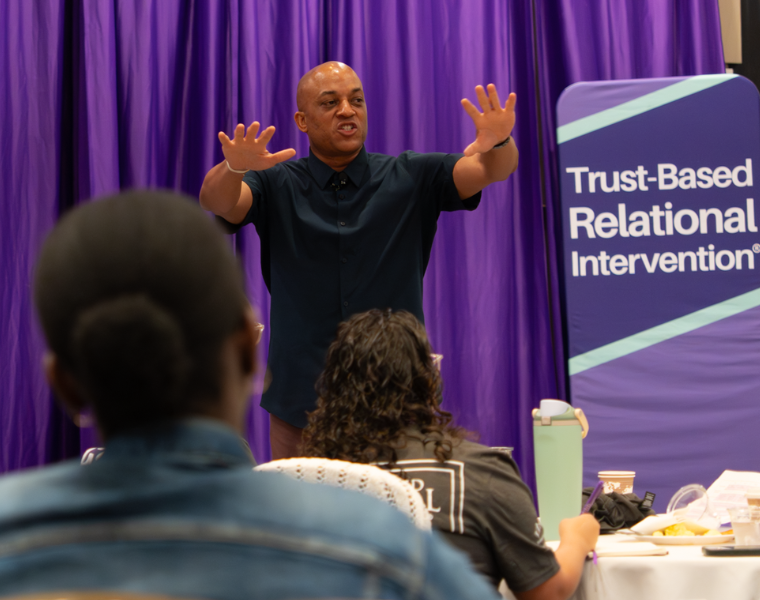
For the first time in nearly 10 years, the Karyn Purvis Institute of Child Development (KPICD) welcomed cohorts of professionals to Texas Christian University's Fort Worth campus for its flagship TBRI® Practitioner Training. The May cohort — a five-day intensive experience that equips caregivers, clinicians, educators and child welfare professionals to implement Trust-Based Relational Intervention® (TBRI®) in their work and communities — marked a meaningful return to the place where the work began.
The return to campus carried significance beyond logistics. It was, in many ways, a homecoming — a chance to reconnect the globally recognized work of KPICD to the university community that has long supported it, and to let the broader TCU family witness, up close, the human impact of two decades of research and practice.
A University Showing Up for Its Mission
He described the training as an example of TCU operating at its highest potential — not just tending to its own campus, but reaching outward. “Not just looking inward at our very beautiful 300-acre campus, but thinking how we might engage communities locally, nationally and, in this case, globally to really make a difference."
For Pullin, the week offered a window into precisely the kind of work he envisions the university championing.
“I think about it as a university at its very best,” he said. "If TCU can be at its very best, we can model behavior and demonstrate what excellence looks like for other universities.”
What Practitioners Experience
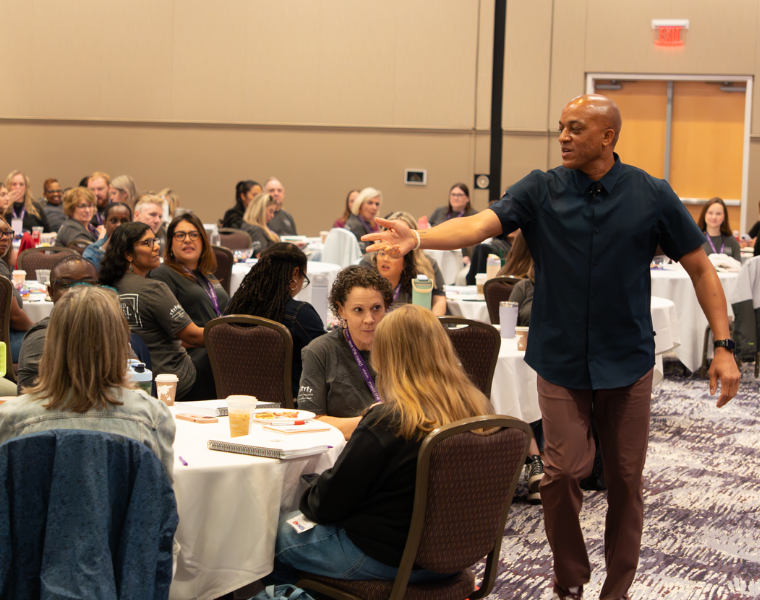
TBRI® Practitioner Training is KPICD's most in-depth professional offering. Grounded in decades of neuroscience, attachment theory, and sensory processing research, TBRI® is an evidence-based model designed to help professionals support children who have experienced early trauma — equipping them to respond to behavioral challenges with connection rather than correction.
The five-day on-campus experience (Phase II) follows 10 weeks of self-paced online coursework (Phase I). Together, the phases prepare practitioners not only to use TBRI® in their own settings, but to train others inside their organizations.
The week’s schedule moved participants through a carefully sequenced arc: morning lectures on resilience, repair and TBRI®'s Connecting, Empowering and Correcting Principles; small-group breakout sessions exploring attachment, nurture and sensory strategies; teaching on indicators of trauma-informed care; and role-plays that built toward a concluding celebration — the official recognition of each participant's new TBRI® Practitioner status.
From Wisconsin, With 25 Years of Experience — and a New Vocabulary
“TBRI® Practitioner Training puts everything in a neat little package with a bow on it,” Jahr said. "I feel very validated in the work I do, and I'm deeply grateful for the kind of formal, in-person training I can bring back to my organization and my community.”
Hers is a story repeated across the training cohort — experienced professionals who have been doing this work intuitively, often in isolation, finally seeing their instincts confirmed and their practices sharpened within an evidence-based framework.
The Practitioners Behind the Statistics
Since KPICD launched its practitioner training program, more than 8,600 TBRI® Practitioners have been trained across all 50 U.S. states, Puerto Rico, the Navajo Nation and 69 countries spanning six continents. The numbers are striking. But for Paola Reynoso, one of two Program Coordinators at KPICD, the meaning of the work lives in the people — not the data.
Reynoso manages the logistics that make each training possible: booking venues and catering, coordinating participant registration and welcoming each cohort to the in-person experience. She is often one of the first and last faces practitioners see.
“It has always been an honor and a privilege to be a part of these practitioners’ journeys,” Reynoso said. “Whether they go on to implement TBRI® at their agency or in their community, or create a trauma-informed environment in their own homes, I find immense joy in being part of the TBRI® memory each of them will carry.”
Twenty Years of Roots, Growing Still
What began in 2005 as a therapeutic summer camp experience has grown into one of the most recognized trauma-informed intervention models in the world. KPICD, with academic programs housed within the TCU Department of Psychology in Davis College, continues to advance its work through research, training, and academic programs that prepare the next generation of child-serving professionals.
The return of TBRI® Practitioner Training to TCU’s campus is a reminder of where that work began — and a sign of where it continues to grow.
The Karyn Purvis Institute of Child Development at TCU advances trauma-informed child development through research, training, and education. As the home of Trust-Based Relational Intervention® (TBRI®), KPICD equips professionals, caregivers and communities around the world to bring hope and healing to children impacted by early trauma. For information about upcoming TBRI® Practitioner Training cohorts, visit child.tcu.edu.