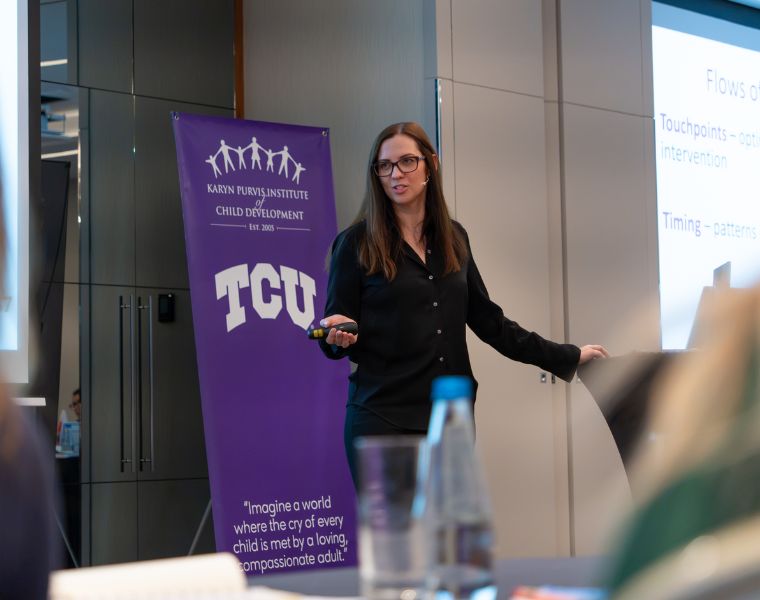
TCU Researcher Brings Trauma-Informed Care to Ukrainian Families
For children who have experienced trauma, healing often begins with the adults who care for them. At Texas Christian University, research scientist Raya Shelashska is working to strengthen those relationships, bringing trauma-informed approaches to families affected by war in her native Ukraine.
“I really want children to be helped and for children to be safe and thriving,” Shelashska said. “And they cannot do it without an adult. They cannot do it without a caregiver.”
Shelashska specializes in developmental trauma and Eye Movement Desensitization and Reprocessing (EMDR) therapy. Her work also incorporates Trust-Based Relational Intervention® (TBRI®), a trauma-informed model developed at TCU's Karyn Purvis Institute of Child Development in the Louise Dilworth Davis College of Science & Engineering.
TBRI helps caregivers understand how adverse experiences shape children's behaviors and emotional responses. Rather than viewing challenging behaviors as defiance, the approach encourages adults to recognize them as survival strategies developed in response to trauma.
"You have to be on [the child's] side, shoulder to shoulder with a child," Shelashska said.
TBRI emphasizes building trusting relationships, meeting physical and emotional needs, and teaching healthy ways to respond to challenges. Shelashska believes supporting caregivers is essential because their own unresolved trauma can influence how they respond to children.
“We cannot bring the healing to the child if we're still hurting,” she said.
While TBRI focuses on relationships and caregiving, EMDR offers another approach to addressing trauma.
EMDR is an evidence-based psychotherapy that helps individuals process distressing memories through structured treatment protocols. During certain phases, therapists use bilateral stimulation, such as guided eye movements, to help reduce the emotional intensity associated with traumatic experiences.
The Impact of War
After Russia’s invasion of Ukraine in 2022, Shelashska began providing virtual EMDR sessions to Ukrainians experiencing war-related trauma. She also worked with displaced children, applying her research to address acute traumatic stress.

“Of course I wanted to do something for my people,” Shelashska said.
She used stabilization protocols designed for acute trauma, working virtually with Ukrainians living through the ongoing conflict. She later received additional training in child and adolescent EMDR and began working online with children, many of whom were refugees.
That same desire to help Ukrainian families ultimately shaped the direction of her research.
“For my dissertation, I really wanted to do something for my people in Ukraine, for families, for children,” Shelashska said.
Her research examined mental health, war trauma and parenting among Ukrainian caregivers across three groups: refugees, internally displaced people and those who had not been displaced. In particular, she wanted to understand whether war affected parenting directly or indirectly through its effects on caregivers’ mental health.
For Shelashska, the research reinforced an idea at the center of her work: supporting children affected by trauma also requires understanding and supporting the adults raising them.
The work extends beyond individual therapy. Shelashska helped facilitate TBRI Practitioner Training in Poland for professionals from Ukraine and neighboring countries, expanding access to trauma-informed care for families affected by conflict.
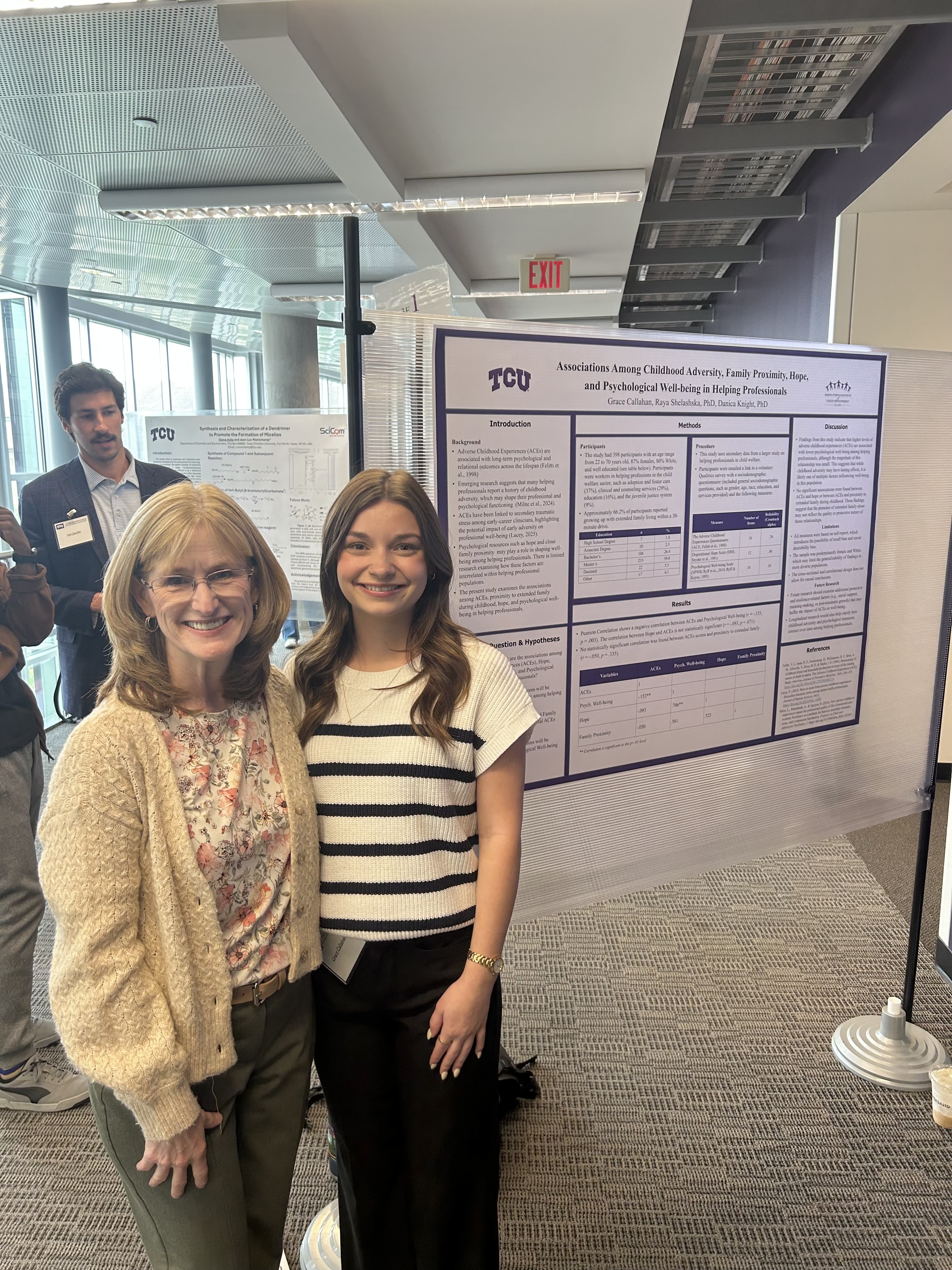
At TCU, she involves undergraduate and graduate students in her research, including Grace Callahan ‘26, now studying for her Masters in Clinical Rehabilitation and Mental Health Counseling at the University of North Carolina at Chapel Hill School of Medicine.
“Working with Raya has helped me understand how trauma affects not only individuals, but entire families,” Callahan said. “It's meaningful to see how research can inform the support available to people facing difficult circumstances.”
For Shelashska the goal is to expand trauma-informed care by equipping professionals with tools to support caregivers and children.
“We cannot help every child or every caregiver,” she said. “But we can train and educate those professionals so they can.”