TCU Expands Engineering Offerings from Undergrad to PhD
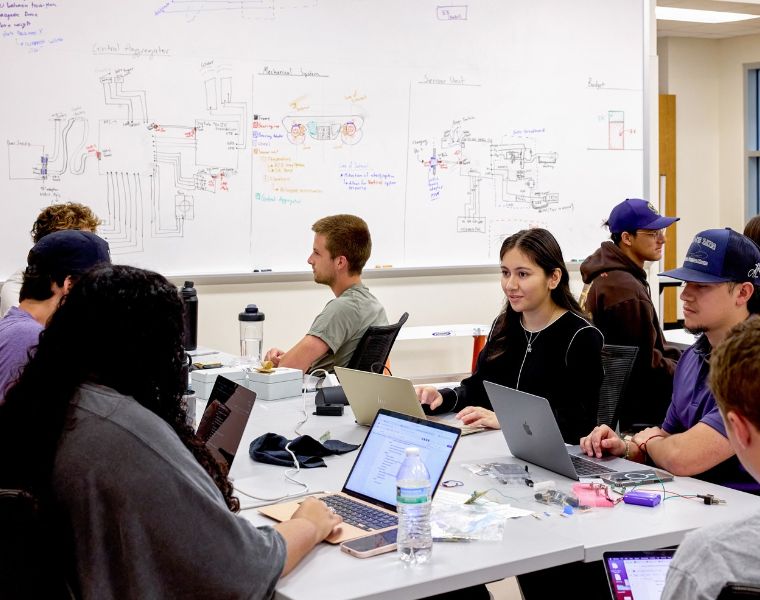
The Louise Dilworth Davis College of Science & Engineering is preparing its most significant academic expansion in more than a decade: a suite of new engineering degrees designed to meet the rapidly evolving demands of industry and to give Horned Frog engineers a distinctive, future-focused edge.
Beginning fall 2027, Texas Christian University will welcome its first cohort of first-years under a re-imagined general engineering track and three new tracks in aerospace, mechanical and electrical engineering. Additionally, the college will launch two advanced degrees: a master’s in systems engineering and a Ph.D. in mechanical engineering.
"These thoughtful, well-structured new programs are definitely going to hit the sweet spot with the industries in Fort Worth, Texas , the country and the world," said T. Dwayne McCay, inaugural Louise Dilworth Davis Endowed Dean of Science & Engineering.
Undergraduate Engineering with Options
A common first-year curriculum provides all engineering students with the same interdisciplinary
foundation, building their problem-solving skills before they specialize.
A broad range of engineering elective courses are developed to accompany the launch of the new engineering programs. Students not only have options to choose their specific engineering majors, but also have opportunities to pursue in depth training in areas such as robotics, building systems, power systems or petroleum engineering.
The addition of new engineering programs and elective courses will strengthen our “grand challenge” capstone senior design projects that require students to tackle real-world problems from multiple disciplines.
With a built-in adaptability approach, program requirements will be reviewed each spring by an industry advisory board so that syllabi stay current with emerging technologies.
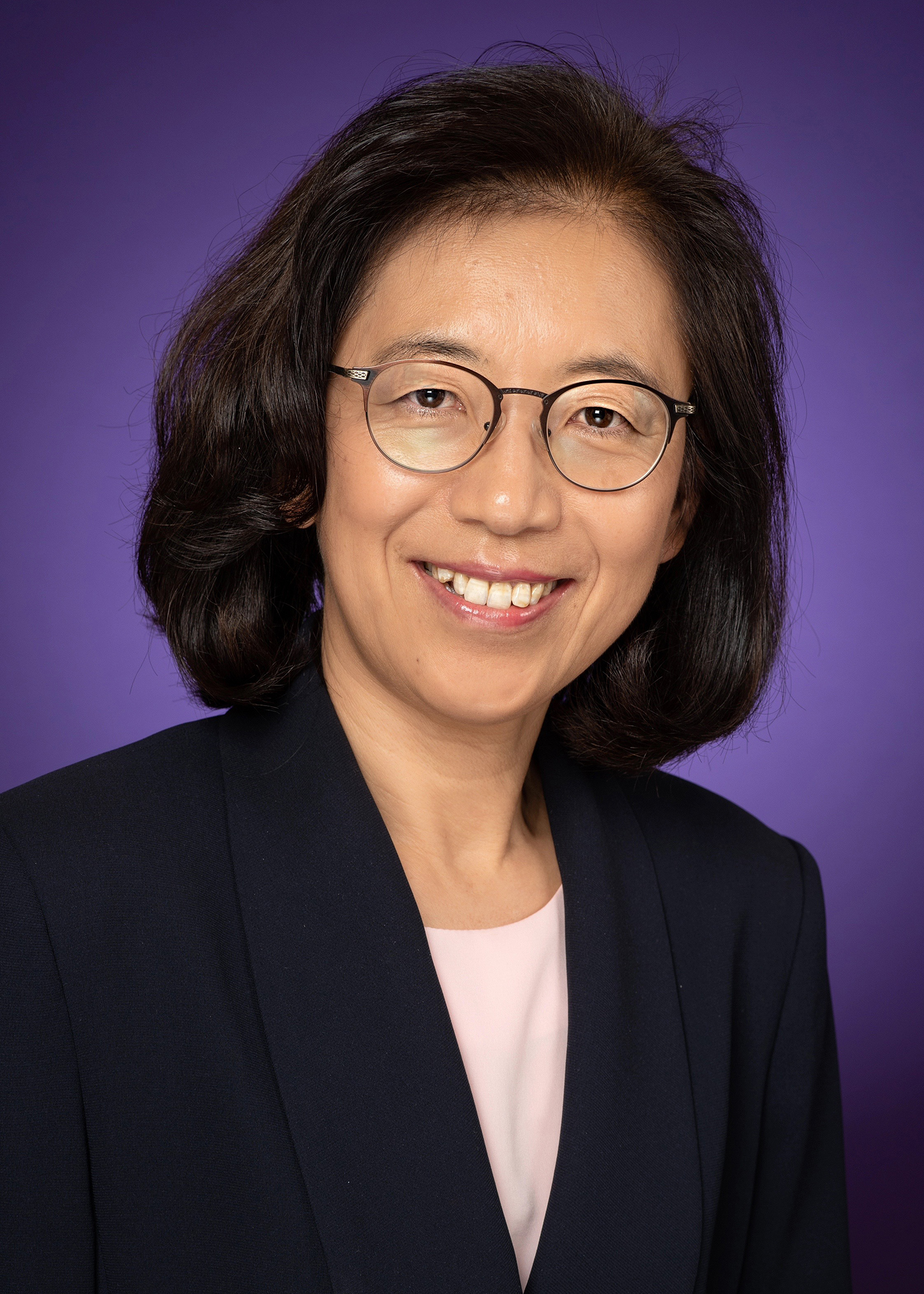
"One unique opportunity created by the TCU’s engineering expansion is that we are able to build all our new programs together," said Sue Gong, department chair. "This has allowed us to design a cohesive curriculum across disciplines, with 16 common courses that support strong and lasting student cohorts. The shared experience helps students build a strong bond and stay connected throughout their college and beyond."
Expanding into Graduate Engineering
The new M.S. in systems engineering is a 30-credit-hour, project-based program that
will be fully remote. The Ph.D. in mechanical engineering will strengthen TCU’s research
profile as TCU works to achieve the Carnegie Classification of Research (R1), the
highest research designation. It will be the college’s second doctoral program after
recently adding a Ph.D. in computer science.
The addition of the Ph.D. in mechanical engineering will strengthen the TCU’s teacher-scholar model by integrating research and teaching and expanding opportunities for undergraduate students to participate in cutting-edge research and gain hands-on experience with advanced technologies.
Expert Leadership
Gong brings industry experience and technical expertise to the classroom and lab.
A graduate of Tsinghua University, she earned her master’s degrees in civil and environmental
engineering from MIT and the University of Minnesota before completing her Ph.D. in
mechanical engineering at MIT. Her research spans MEMS design, microscale energy-harvesting
devices and wireless sensor networks, and she is widely cited for her early work on
ultrasonic-induced cavitation and its sonochemical applications. Gong is currently
collaborating with researchers at Johns Hopkins University and Rochester Institute
of Technology on the design and development of a MEMS-based micromirror array device
to enhance the performance of space telescope multi-objective spectrographs.
Davis College’s expansion is overseen by McCay, interim Louise Dilworth Davis Dean, a physicist-turned-aerospace engineer with 30-plus years in academic, government and industry leadership. A former NASA propulsion-systems leader and elected Fellow of the National Academy of Inventors, McCay holds 16 patents and more than 120 publications. His track record includes steering accreditation for four engineering programs at UT Permian Basin and authoring Florida Tech’s strategic research plan — experience that will accelerate TCU’s push toward R1 status.
The college experienced a surge last fall with a $40 million gift from namesake Louise Dilworth Davis ’77 that endowed the deanship and will support the college’s strategic plan and operations in perpetuity.