TCU Engineering Experts Explain Carbon Capture, Sequestration

As energy demands continue to grow, Texas Christian University engineering faculty are using more than a decade of research to explain how we can store carbon dioxide underground to keep it out of the atmosphere. Ebrahim Fathi, the new Ross B. Matthews Professor of Petroleum Engineering, and Fatemeh Belyadi, assistant research professor, are drawing on experience with carbon capture, utilization and storage (CCUS) projects across the country.
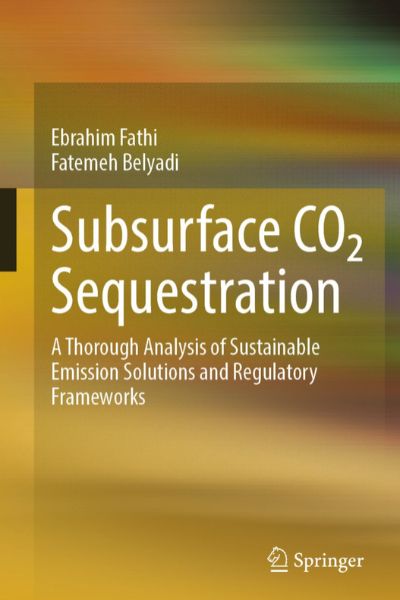
The two Louise Dilworth Davis College of Science & Engineering faculty members partnered on “Subsurface CO₂ Sequestration: A Thorough Analysis of Sustainable Emission Solutions and Regulatory Frameworks,” a new work that explains the feat of storing carbon dioxide in geological formations, as well as the technologies and regulatory considerations involved in deploying carbon storage at scale.

In this Q&A, Fathi discusses why subsurface carbon storage matters and how the work connects to the research and educational opportunities the engineering program hopes to advance at TCU.
What inspired this new book, and why did you feel it was important to publish it now?
Dr. Fatemeh Belyadi and I have worked extensively on CO₂ storage and enhanced oil and gas recovery, combining laboratory experiments and advanced numerical simulations with large-scale field applications. These experiences have given us a practical understanding of the scientific, engineering and regulatory challenges associated with deploying carbon storage at a commercial scale.
The book is particularly timely as the world faces the challenge of meeting growing energy demands while reducing greenhouse gas emissions. We wanted to provide a resource that connects scientific understanding with practical engineering solutions and regulatory frameworks while considering energy sustainability, security and environmental protection together.
Why is subsurface CO₂ sequestration important, and what role could it play in addressing current energy and environmental challenges?
Subsurface CO₂ sequestration involves capturing carbon dioxide from industrial facilities and other emission sources, transporting it and injecting it into carefully selected geological formations deep underground for long-term storage.
As global energy demand increases, we need practical approaches to reduce emissions while maintaining reliable and secure energy systems. Geological
CO₂ sequestration can play an important role, particularly for hard-to-decarbonize industries such as steel, cement, chemical and energy production.
Successful carbon storage, however, involves much more than injecting CO₂ underground. We must demonstrate that it can remain securely contained in geological formations for at least 1,000 years. That requires careful site selection, geological characterization, appropriate engineering design, well integrity and long-term monitoring to minimize leakage risks and protect surrounding environments.
How does the book connect to your research, teaching or other work at TCU?
The book closely aligns with our research vision in Davis College Dr. Belyadi and I are working to establish multidisciplinary research collaborations involving TCU faculty, federal agencies, universities and industry partners.
At TCU, we see an opportunity to bring together expertise across engineering, geosciences and computational sciences to address emerging energy and environmental challenges. We also aim to translate this research into educational opportunities that prepare the next generation of engineers and scientists.
What do you hope readers will take away from the book, and how do you hope it contributes to the field?
We hope readers recognize subsurface CO₂ sequestration as an important component of a broader strategy for achieving a sustainable and reliable energy future. The book is intended to serve as a resource for students, researchers, engineers, policymakers and industry professionals by connecting fundamental science with engineering applications, commercial deployment and regulatory considerations.
Most importantly, we want to emphasize that addressing climate change and maintaining energy security do not have to be competing objectives. Through sound science, responsible engineering, innovation and effective regulation, we can develop practical solutions that reduce emissions while supporting reliable energy production and economic development.